
7 Habits That Are Making You Look More Junior In The Office
Aug 26, 2026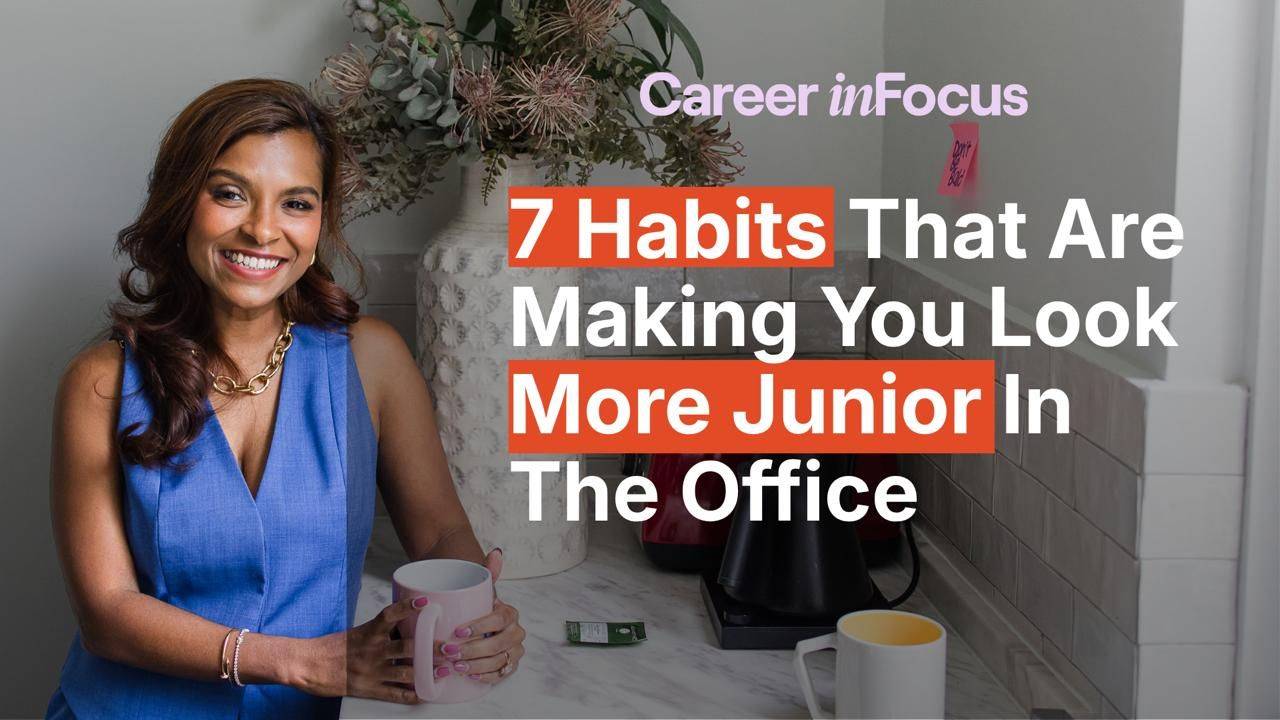
As you become more senior, people are not only looking at whether you can do the work. They are also looking at how you think, how you communicate, how you make decisions and whether they can trust you with greater responsibility.
Sometimes, the habits that helped you succeed earlier in your career are the very things that can make you look more junior as you progress.
1. Over-explaining your decisions
Senior professionals make decisions and stand behind them. They do not narrate every step of their reasoning to prove they have thought it through. The over-justification often says more about insecurity than it does about thoroughness.
State the decision, invite questions if needed, and let your judgment speak.
2. Starting with an apology
"Sorry, I just had a thought."
Prefacing your thought with an apology can reduce the weight of a great idea before you have even shared it. Try this instead: "One perspective I would add is..."
It is the same idea, but presents a completely different presence.
3. Looking for permission instead of making recommendations
As you become more senior, people are looking to you for judgment, not just updates.
When you walk into a room and ask "What do you think we should do?" you are positioning yourself as someone who needs direction. At a certain level, that is the wrong dynamic.
Try this instead: "Based on what we know, my recommendation is..."
You are still open to input. But you are leading with a point of view, which is exactly what senior leadership looks like.
4. Staying quiet until your idea is perfect
Many high performers do this and think it makes them look more professional. More often, it makes their thinking invisible.
Waiting until every detail is airtight might mean the conversation has often already moved on without you. Senior professionals shape discussions as they happen. They think out loud, invite reaction, and refine in real time.
Your half-formed idea, when shared early, is often more valuable than your perfectly polished one shared too late.
5. Always being the one who adapts
Being collaborative is important, but leadership is not just about being collaborative. It is also about influencing the direction of the conversation.
If you are always the one adjusting to everyone else’s priorities, preferences and perspectives, you may be perceived as helpful, but not necessarily as someone who shapes outcomes.
As your career grows, you need to become comfortable not only responding to the direction of the conversation, but influencing it.
6. Treating responsiveness as productivity
Being available all the time is not the same as being strategic with your time.
When you say yes immediately to every request, reply to every message within minutes, and never push back on timelines, it can signal that your time is not particularly valuable. Senior professionals protect their capacity. They clarify priorities before committing.
Sometimes the more senior response is not, “Sure, I’ll get that done.”
It is, “I can take this on. Which of these priorities would you like me to focus on first?”
7. Downplaying your own expertise
As your career grows, it is not just what you do that matters. It is how people experience working with you, and how clearly they understand what you bring to the table.
Downplaying your expertise might feel like humility. To the people watching, it can look like a lack of confidence in your own value. Own what you know. Share your perspective. Let people see your thinking.
The shift from being good at your job to being seen as ready for the next level is almost always about perception before it is about performance.
Rooting for you,
Angel Kilian
Founder | Career inFocus
Stay connected with news and updates!
Subscribe to get practical and actionable career tips right in your inbox. You'll also be the first to know of special coaching offers.
By entering your email, you agree to receive updates and resources from us. You can unsubscribe anytime.